
“LeRoy wasn’t any better-looking than Astaire, and his acting was pretty much aw-gee. But he was personable.” –Brian Seibert on Hal Le Roy
The Golden Age of Hollywood boasted many wonderful dancers, with some remembered more than others. While often overlooked, Hal Le Roy was one of the top dancers in early Hollywood, often appearing in early Vitaphone and Warner Brothers shorts.
John Le Roy Schotte was born in Cincinnati, Ohio, on December 10, 1913, where he learned tap dancing from an African-American friend. The two boys sold newspapers in town and attempted to imitate the latest vaudeville acts that passed through town. While lanky in frame and possessing a strong overbite, Le Roy excelled in dancing and enthusiastically danced in venues throughout Cincinnati. His first professional job would occur as part of the Hoboken Heroes at the Lyric Theater in Hoboken, New Jersey, in 1928, thanks to his dancing teacher, Ned Wayburn.


Later, he secured work in the 1931 Broadway show The Gang’s All Here and soon found himself working for the Ziegfeld Follies. There, Le Roy was encouraged to develop his own choreography to entertain the crowd. As he devised routines in advance and on the spot, he delighted audiences with his dancing abilities. While working on the Broadway circuit, he befriended Bill “Bojangles” Robinson, who would invite him along to various dancing clubs and test his skills.
Thanks to his reputation within the Follies, Le Roy soon worked in film shorts for Vitaphone in Vitaphone’s Brooklyn studio, where he would appear in musical shorts alongside other up-and-coming starlets including June Allyson and June Preisser. Throughout the 1930s, he also appeared in stage productions such as Thumbs Up (1935), Too Many Girls (1939), and Count Me In (1942). In addition, he performed regularly in reviews, vaudeville, and in the New York nightclub scene.


In 1935, Le Roy found himself in a poor financial situation, which caused him to sue his father. He found that when he married his dancing partner, Ruth Dodd, his father withdrew $70,000, which had been on deposit per Le Roy’s late mother. As his relationship with his father became strained, Le Roy (and his wife) lived with his in-laws in the 1940s.


Despite this challenge, Le Roy continued to appear in films and in shows throughout the 1930s and 1940s at notable venues such as Radio City Music Hall, the Capitol Theatre, and more. He maintained a role in the film version of Too Many Girls (1940) but also played the title role in a series of Harold Teen films for Warner Brothers. When television arrived, he was chosen to be a featured performer for Bob Hope’s television premiere. On the side, he also appeared in summer stock and supper club productions such as Show Boat, Where’s Charley?, and High Button Shoes until he became ill.


By the 1960s, Le Roy turned to directing, as he did not maintain the energetic physicality he needed for his dancing style. As a result, he directed an off-Broadway show called Summer’s Here and a musical version of The Legend of Sleepy Hollow in 1966.
Le Roy passed away on May 2, 1985, following heart surgery in Hackensack, New Jersey. He left behind no heirs and his funeral arrangements were private.
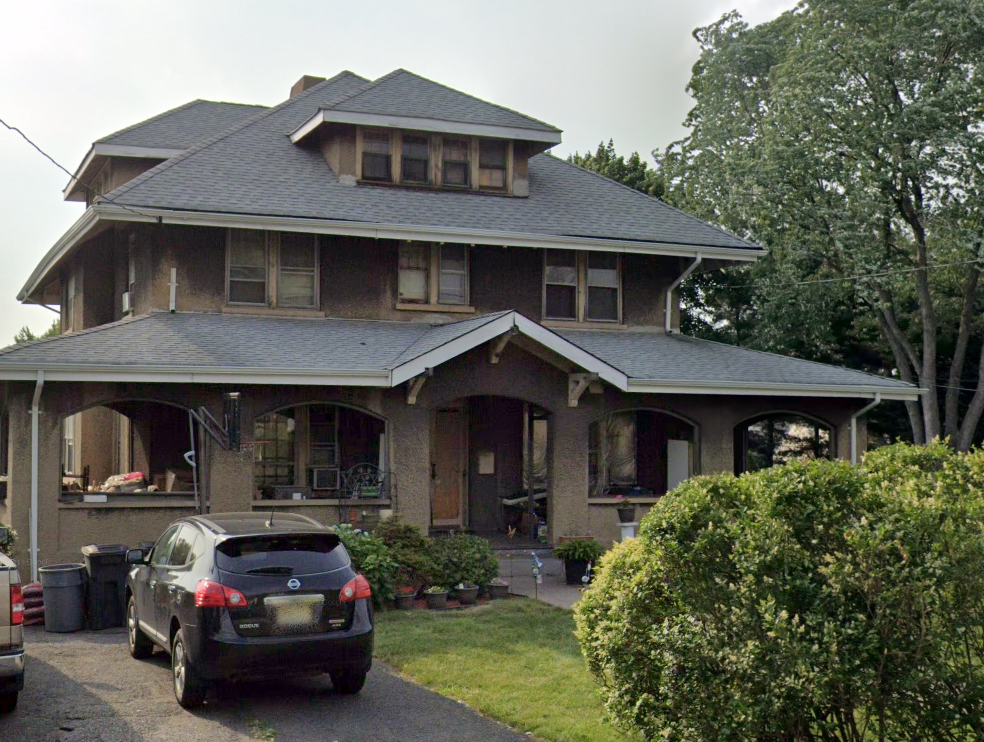
To this day, not many tributes to Le Roy remain. The home he lived in during the 1940s remains at 495 Maywood Ave in Maywood, New Jersey. Here is the property today:
The best way to remember him is to not only view his films but to also enjoy the rare musical shorts in which he appeared—many of which are available to viewers thanks to the ongoing efforts of the Vitaphone Project.






 Hometowns to Hollywood
Pingback: Classic Movie Travels: Dorothy Dare | Classic Movie Hub Blog
Pingback: Dorothy Dare | Hometowns to Hollywood
This guy is a lost treasure. I just found him today on TCM.
Me too. And then I Googled him. Wikipedia
and IMDB say very little about him. Thank you for this website.
Why was he not in more major movies?
What a talented tap dancer. So sad he didn’t experience such fame as Fred Astaire but, we should be glad he’s still alive in the movie shorts and the internet!!
Probably the best tap dancer that ever lived. I’ve seen him in a vaudeville show in the early 1940’s He was seated in a chair And his feet danced around the legs of the chair. It still is in my memory. God Bless Him.
My husband’s late Mother in law was a fellow dancer on stage, and worked with Hal in the early days. Her Name was Billie Legs Lee.